In an event that has sent shockwaves through global maritime channels and military circles, a cargo ship identified as the USS Valor has disappeared under mysterious and terrifying circumstances. The vessel, which was reportedly transporting approximately ten tons of military ammunition destined for the United States Army, vanished shortly after emitting erratic signals, leaving behind only a trail of foam and a profound, unsettling silence. What began as a routine logistical mission for advanced training operations has quickly spiraled into a national security crisis, as the ship was carrying classified materials essential for strategic exercises.
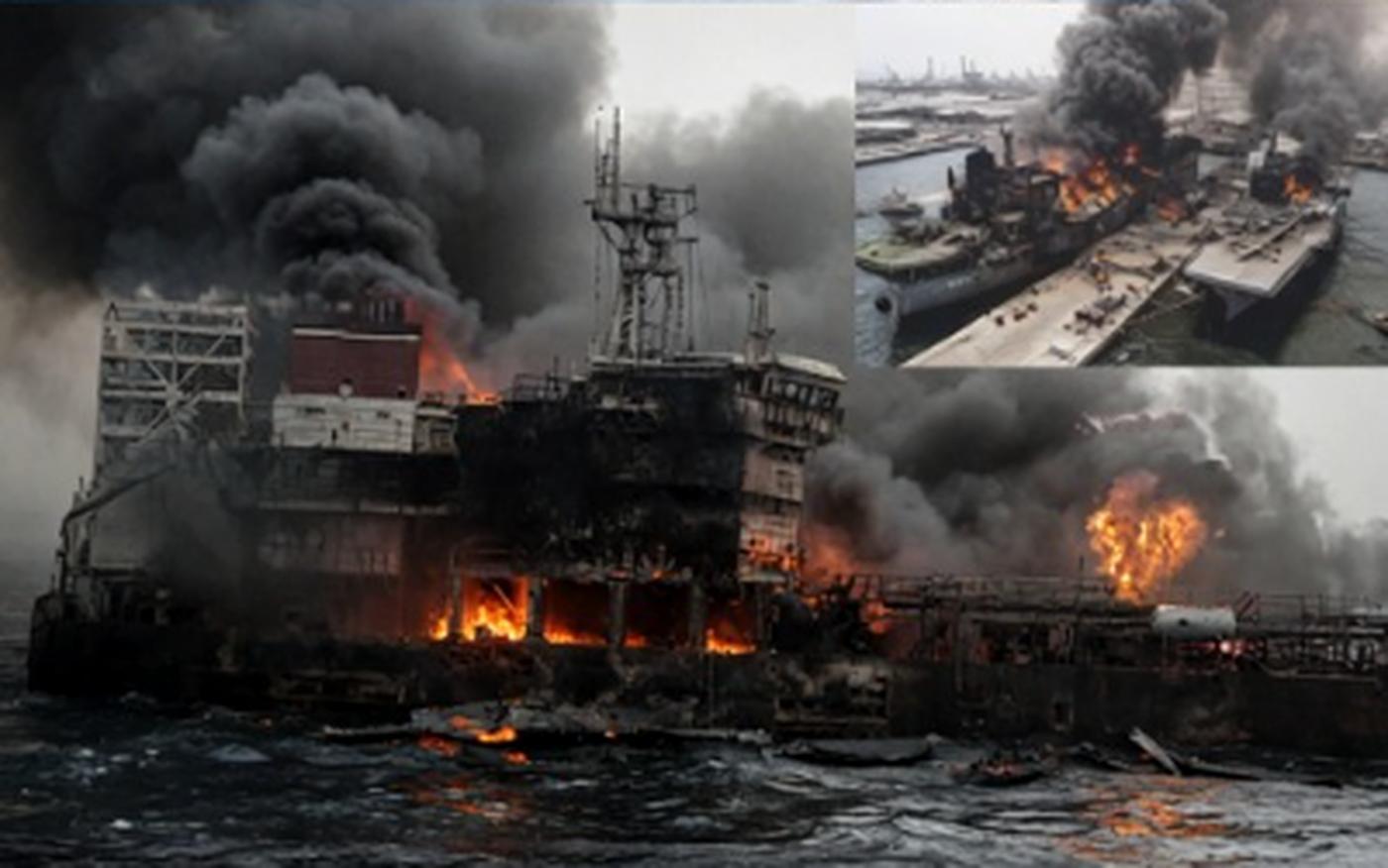
Witness accounts from nearby vessels describe a harrowing scene that can only be characterized as a maritime nightmare. The USS Valor reportedly lost stability with alarming speed, tilting sharply before being swallowed by the ocean in a brutal and confusing descent. Observations of the site suggests a catastrophic failure, yet the lack of a clear explanation from official channels in Washington has fueled a climate of intense suspicion and public anxiety. The Pentagon has issued only a brief confirmation of the incident, maintaining a strict level of secrecy that has left experts and the public alike demanding more transparency regarding the ship’s final moments.
The disappearance of such a significant cargo of ammunition raises critical questions about territorial security and the vulnerability of military supply routes. Several hypotheses are currently being debated by defense analysts. While some point to a severe mechanical failure or a chain-reaction internal explosion caused by the sensitive nature of the cargo, a more unsettling theory is gaining traction: the possibility of external interference or calculated sabotage. Reports of unidentified vessels in the vicinity of the USS Valor during its sinking have added weight to the suspicion that this may have been a hostile act disguised as a tragic accident, potentially serving as a strategic message from global rivals.
At the center of this developing story is Captain Sarah Mitchell, the commanding officer of the USS Valor. Known for her tactical precision and discipline under pressure, Captain Mitchell is being portrayed by witnesses as a figure of calm in the midst of total chaos, directing her crew until the very end. Her leadership highlights the human face of a tragedy that is often discussed in terms of logistics and geopolitics. Simultaneously, the families of the crew, represented by voices like John Thompson—the father of a sailor on board—are living through an agonizing wait for news, reminding the public that every lost ton of military hardware represents a profound human cost.
As social media becomes a breeding ground for viral theories and political debate, the incident is being viewed as a symbolic blow to the image of United States maritime power. Specialists argue that the loss of the USS Valor necessitates a complete re-evaluation of security protocols and logistical readiness. Whether the cause was a technical failure or a covert operation, the sinking has exposed cracks in an infrastructure long thought to be indestructible. Until the secrets held within the sunken hull are revealed, the world remains focused on those dark waters, wondering if the USS Valor is merely the victim of the sea or the first sign of a much larger, more dangerous geopolitical shift.