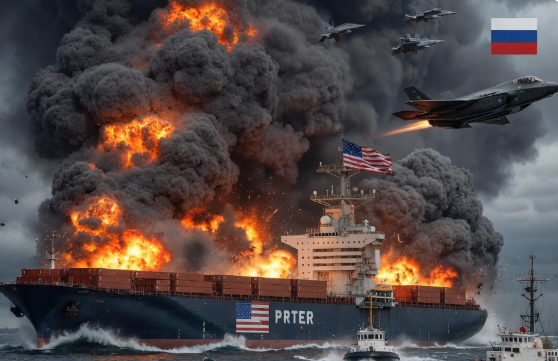
The sudden and unexplained sinking of the USS Valor has sent shockwaves through the global maritime community, transforming a routine cargo transit into a high-stakes national security investigation. The vessel, a dedicated cargo ship, was tasked with transporting approximately ten tons of classified ammunition destined for the United States Army. This loss has not only triggered an immediate military response but has also exposed potential vulnerabilities in the American strategic supply chain during a period of heightened international tension. What began as a standard mission has now become a focal point for military analysts and the public alike, as authorities struggle to determine if the disaster was a tragic accident or a calculated act of aggression.a
Eyewitness accounts from sailors on nearby commercial vessels provide a harrowing timeline of the USS Valor’s final moments. Reports indicate that the ship began transmitting irregular and confused signals shortly before veering dangerously off its planned course. In a matter of minutes, the freighter began listing sharply to one side, indicating a catastrophic breach of hull integrity. Witnesses described a scene of frantic activity as the crew attempted to stabilize the listing vessel against an overwhelming intake of water. The sequence concluded with the ship being swallowed by the ocean, leaving behind only a churning trail of foam and debris in what many have described as a hauntingly rapid disappearance.
The specific nature of the cargo has added a significant layer of gravity to the situation. While ten tons of munitions is a manageable quantity by modern logistical standards, the ordnance aboard the USS Valor was specialized and intended for advanced training operations and highly sensitive strategic exercises. The Pentagon has issued a brief, formal statement confirming the incident but has maintained a strict vacuum of information regarding the operational specifics of the cargo. This secrecy has inadvertently fueled public anxiety and led to intense speculation about the potential impact of this loss on national readiness and the security of ongoing military programs.
Amidst the chaos of the sinking, the leadership of Captain Sarah Mitchell has emerged as a focal point of the narrative. Known within naval circles for her tactical acumen and disciplined approach to command, Mitchell reportedly remained a pillar of composure as the disaster unfolded. Eyewitnesses observed her issuing firm, steady commands even as the deck of the USS Valor tilted toward the water line. This image of unwavering leadership in the face of certain catastrophe has resonated deeply with both the military and the civilian population, though the ultimate fate of Mitchell and her crew remains a distressing uncertainty as search and recovery efforts continue.
The human cost of the incident is perhaps most poignantly articulated by the families left behind. John Thompson, the father of a sailor stationed aboard the USS Valor, has become a voice for the many families currently waiting for news in a state of prolonged agony. His public pleas for information highlight the raw reality that behind every headline regarding classified missions and military strategy are the lives of individual service members. These families are now caught in a painful limbo, waiting for the United States Navy to provide definitive answers about the whereabouts and safety of their loved ones.
In the absence of a clear official explanation, several competing theories have emerged to explain the ship’s demise. The most conventional hypothesis points toward a catastrophic mechanical failure, perhaps involving a sequence of system collapses that modern ships are rarely expected to survive. Other experts suggest the possibility of an internal explosion, potentially caused by a malfunction or an accident involving the sensitive ammunition stored in the hold. Such an event would explain the rapidity of the listing and the lack of time the crew had to deploy primary emergency measures before the vessel was compromised beyond repair.
However, a more sinister possibility involving external interference or deliberate sabotage is gaining traction among defense observers. Reports of unidentified vessels operating in the general vicinity of the USS Valor during the timeframe of the sinking have raised concerns about “gray-zone” tactics and hybrid warfare. In a modern geopolitical climate where attribution is often difficult to establish, the prospect that a military supply ship could be targeted without an overt declaration of war is a chilling scenario for the United States. Social media platforms have become a breeding ground for these theories, with users dissecting satellite imagery and naval data to find evidence of a strategic warning shot from a rival power.
The strategic consequences of the sinking are expected to be long-lasting. The loss of the ammunition will force a significant rescheduling of joint exercises and a thorough review of the protocols governing the transport of sensitive military assets. Beyond the logistical delays, the symbolic impact of the USS Valor‘s loss is profound; a ship entrusted with vital cargo vanishing under mysterious circumstances suggests that even the most well-monitored operations are susceptible to the unpredictability of the sea or the malice of human actors. As investigators begin the arduous task of sifting through debris and data logs, the United States faces a critical moment of reflection regarding its maritime resilience and the true security of its global supply lines.