President Donald Trump is raising the possibility of greater federal control over Washington, D.C., if democratic socialist candidate Janeese Lewis George wins next week’s Democratic mayoral primary.
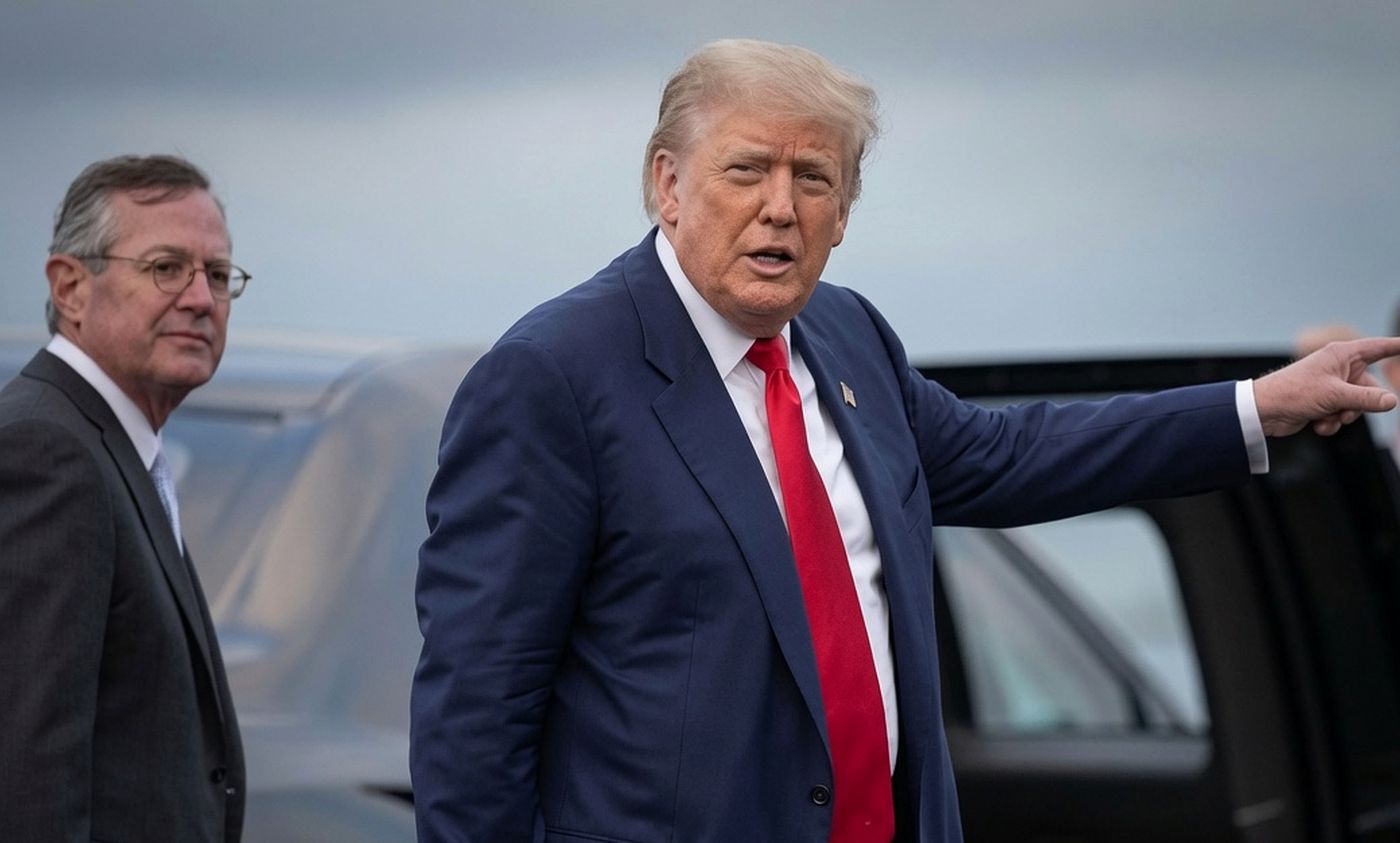
Speaking to reporters during an Oval Office event on Thursday, Trump said he would strongly oppose a George victory and suggested the federal government could step in if he believed the city was moving in the wrong direction.
“I wouldn’t like it, and maybe we take back Washington and run it on a federal basis,” Trump said.
“We won’t put up with it. We’re not going to lose our businesses,” the president added.
Trump did not mention George by name, but his comments appeared directed at the D.C. councilmember, who has emerged as the leading candidate in the race to succeed outgoing Mayor Muriel Bowser.
Recent polling shows George holding a double-digit lead over former D.C. Council member Kenyan McDuffie ahead of the June 16 Democratic primary.
The remarks immediately intensified an already heated debate over the future of the nation’s capital and the scope of federal authority over local government.
Washington operates under the District of Columbia Home Rule Act, which grants residents the ability to elect their own mayor and city council while still leaving Congress with ultimate authority over the district.
Trump has repeatedly argued that the federal government should play a larger role in governing Washington, citing concerns about crime, homelessness, public safety, and economic development.
“We have a thriving community,” Trump said Thursday. “We got rid of crime.”
“Washington now is a safe, beautiful place. People are coming. Restaurants are thriving.”
🚨 IT'S OFFICIAL: President Trump is considering a FULL TAKEOVER of Washington DC if the leftist socialist Democrat wins the mayoral election
"Maybe we take back Washington and run it on a federal basis! We WON'T put up with it! We're not gonna lose our businesses…we have a… pic.twitter.com/xIMcPaGO01
— Eric Daugherty (@EricLDaugh) June 15, 2026
The president suggested that a socialist administration could reverse those gains and harm businesses operating in the city.
His comments come less than a year after he took the unprecedented step of invoking emergency powers under the Home Rule Act to temporarily assume control of the Metropolitan Police Department.
Last August, Trump ordered a federal takeover of the city’s police force and deployed National Guard troops throughout Washington.
The move generated fierce opposition from local officials and congressional Democrats, who accused the administration of undermining local self-government.
While the direct federal control of the police department ended after several weeks, National Guard personnel have remained stationed in the city, and Pentagon officials have indicated the deployment could continue through the end of Trump’s term.
George quickly responded to Trump’s latest comments, calling them a direct threat to local democracy.
“Threatening home rule because you do not like how residents vote is an attack on democracy itself,” she said.
“The people of D.C. elect the mayor of D.C., and they want someone who will stand up to Donald Trump.”
George, a member of the Democratic Socialists of America, has built her campaign around housing affordability, lower living costs, expanded social programs, and public safety reforms.
The controversy surrounding George has expanded beyond her policy proposals.
Earlier this year she faced criticism for opposing youth curfews during a period of highly publicized teen mob incidents and large fights that disrupted neighborhoods across the city.
During a mayoral debate, George argued that expanded youth programs, apprenticeships, and community services would be more effective than curfews.
Critics countered that stronger enforcement measures were needed to address growing concerns about public disorder.
More recently, George also faced scrutiny after purchasing a $1.19 million single-family home while simultaneously advocating for major zoning reforms and criticizing single-family housing restrictions as tools of economic exclusion.