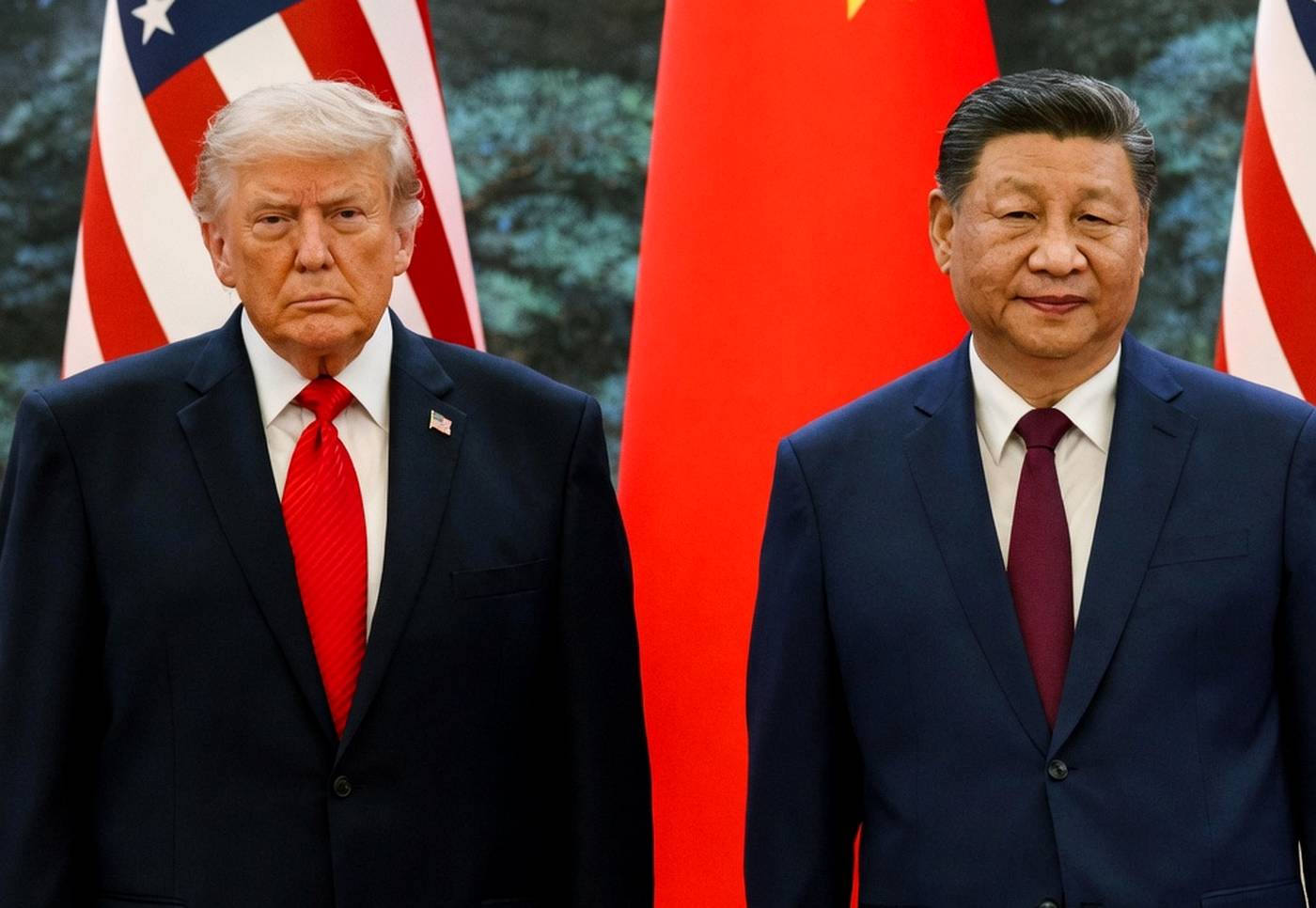
President Donald Trump announced during his high-profile visit to China that Chinese President Xi Jinping will make a reciprocal visit to the White House in September.
The surprise announcement came amid tense warnings from Beijing over Taiwan and growing geopolitical friction between the two powers.
(Trump stares down XI and drops a bombshell to his face)
Speaking during a formal toast, Trump struck an upbeat tone and praised the relationship between the United States and China.
“We look forward to it, and I’d now like to raise a glass and propose a toast to the rich and enduring ties between the American and Chinese people,” Trump said.
(Top official quits minutes before Trump lands in China)
“It’s a very special relationship, and I want to thank you again. This has been an amazing period of time,” he added.
Before their private talks began, Trump personally praised Xi.
“You’re a great leader,” Trump said. “Sometimes people don’t like me saying it, but I say it anyway, because it’s true.”
“It’s an honor to be your friend,” Trump added.
He also predicted that “the relationship between China and the USA is going to be better than ever before.”
But while Trump projected optimism, Xi’s message was markedly more serious.
According to Chinese Foreign Ministry spokesperson Mao Ning, Xi used the summit to issue a pointed warning about Taiwan, which Beijing views as the most sensitive issue in its relationship with Washington.
“The Taiwan question is the most important issue in China-U.S. relations,” Mao said, recounting Xi’s remarks.
“If it is handled properly, the bilateral relationship will enjoy overall stability,” she added.
“Otherwise, the two countries will have clashes and even conflicts, putting the entire relationship in great jeopardy.”
The warning comes as tensions remain high over U.S. military support for Taiwan, including a recently approved multibillion-dollar arms package.
China considers Taiwan part of its territory, while the United States has long maintained support for the island’s self-defense.
Xi also raised broader concerns about conflict between major powers, invoking the “Thucydides Trap,” a concept in foreign policy suggesting war can erupt when a rising power challenges an established global power.
Still, Xi paired his warnings with a call for cooperation.
“Cooperation benefits both sides, while confrontation harms both,” Xi said.
“The two countries should be partners rather than rivals.”
The summit unfolded with a major ceremony at Beijing’s Great Hall of the People, where booming cannons, military honors, and schoolchildren waving American and Chinese flags underscored the diplomatic theater.
The two leaders met privately for roughly two hours before Xi later hosted Trump at the Temple of Heaven and a formal state banquet.
Trade was another central focus of the discussions.
The White House has indicated Trump hopes to secure expanded Chinese purchases of American soybeans, beef and aircraft while also working toward broader trade mechanisms to ease commercial disputes.
Xi suggested China remains open to economic cooperation.
China’s “door of opportunity” will open wider, he reportedly said.
Iran also loomed over the summit.
Administration officials have been pressing Beijing to use its leverage with Tehran, particularly as tensions surrounding the Strait of Hormuz threaten global energy markets and economic stability.
The White House said both nations agreed the crucial waterway must remain open, though no major policy breakthrough was immediately announced.
Secretary of State Marco Rubio had argued ahead of the trip that China’s economic ties to Iran gave Beijing substantial influence, The Associated Press reported.
Taiwan responded positively to continued American backing.
“The government views all actions that contribute to regional stability and the management of potential risks from authoritarian expansion positively,” Taiwanese spokesperson Michelle Lee said.
The summit reflects the complicated nature of U.S.-China relations, where public diplomacy, economic cooperation and major strategic disagreements continue to collide.
Trump’s announcement of Xi’s White House visit suggests both sides want to preserve engagement.
But Beijing’s warning over Taiwan made clear that the relationship remains anything but simple.