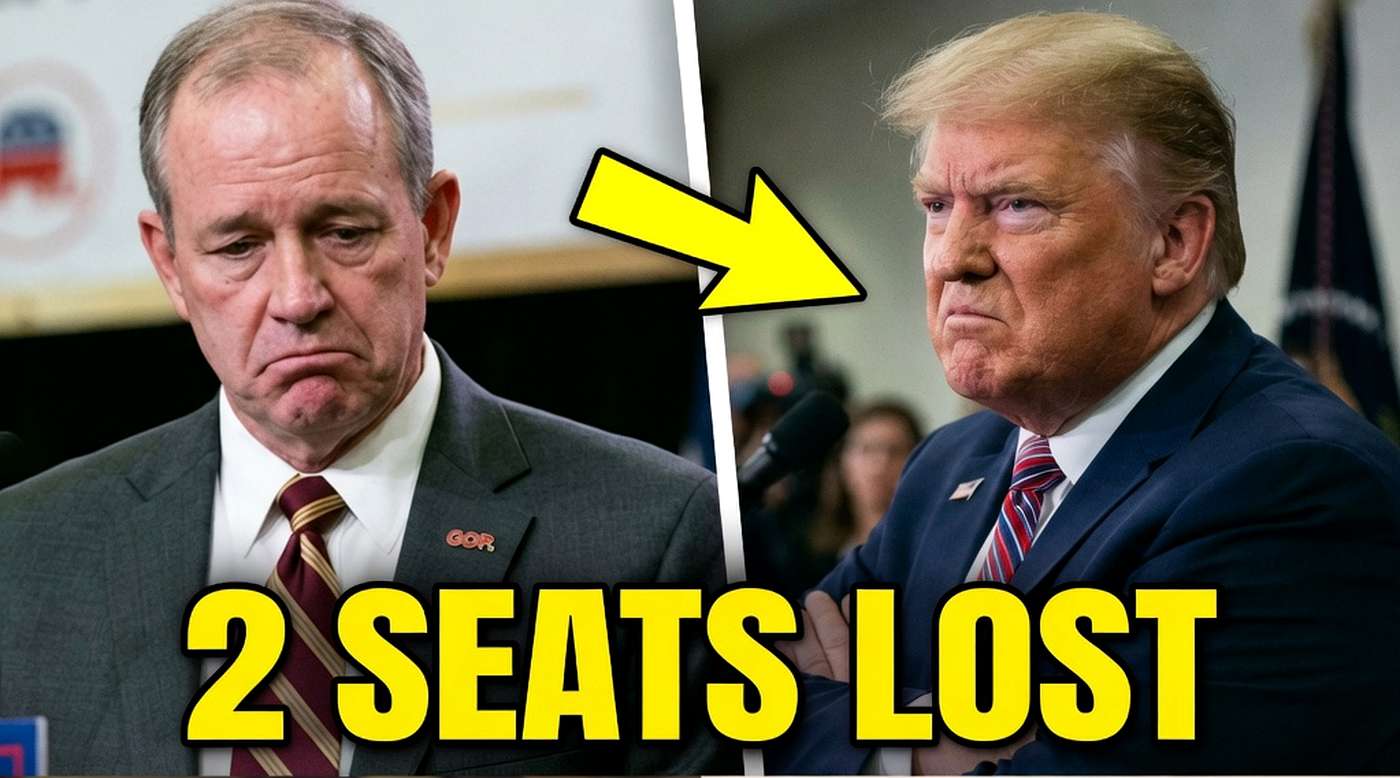
WASHINGTON, D.C. — In a rare moment of brutal political honesty, a senior White House official has shattered the administration’s carefully curated facade of optimism. Speaking directly to MSNBC reporters this week—not on background, not anonymously, but with a startling lack of the usual defensive posture—the official summarized the administration’s internal forecast for November in five words: “The vibe right now is we know we are already cooked in the midterms.”
This admission, coming in the early days of May 2026, signals a profound shift in the political landscape. While President Trump continues to frame himself as his own “best communications director,” the data suggests that his message is hitting a brick wall of economic reality. As gas prices soar and the “short-term” pain of the Iran conflict stretches into its third month, the “math” of the 2026 midterms is becoming an existential threat to the Republican trifecta.
The Economic Disconnect: A 27% Approval Rating
The “cooked” sentiment is backed by a devastating new Reuters/Ipsos poll. For the first time in modern political history, the Republican party has lost its traditional “home field advantage” on the economy.
-
Economic Approval: 27%
-
Economic Disapproval: 63%
The shift is seismic. While the President remains “disciplined at being undisciplined”—focusing on White House renovations and personal grievances—the American public is focused on the rising cost of healthcare, groceries, and a gallon of gas that now averages $4.44 nationally.
“Perceptions are getting firmer and firmer in a way that is unhelpful to Republicans,” noted one political analyst. “You can dispatch the President to talk about affordability, but you can’t make him stay on script. If he wants to talk about the ballroom, he’s going to talk about the ballroom.”
The Down-Ballot Panic: Primary Loyalty vs. Fall Survival
For congressional candidates, the calculation is even more precarious. While the White House may feel “cooked,” Republicans in competitive districts are entering a state of high-stakes self-preservation.
In states like Kentucky, the President’s endorsement still holds the power to end a political career. Reporters on the ground describe a “quiet grumbling” with names withheld. Candidates are walking a tightrope: satisfying a base that remains “primarily satisfied” with the President’s leadership while preparing for a general election where independent voters are fleeing the GOP in record numbers.
“Nobody wants to be the one he targets on social media before they get through their own primary,” said an analyst. “The calculation will change in the fall. When these candidates need to create separation from the President to survive, you will start to see the cracks become chasms.”

The “Jim Crow” Restoration: The Gutting of the VRA
As the GOP’s economic message falters, the battle has shifted to the very mechanisms of democracy. Leader Stacey Abrams and other voting rights advocates are sounding the alarm over what they describe as a “lightning-fast stripping of power” designed to prevent a multi-racial, pluralistic democracy from ever taking hold.
The Supreme Court’s recent gutting of the Voting Rights Act (VRA) has produced immediate, real-world consequences this week:
-
Louisiana: Postponing U.S. House primary elections—even after some voters had already begun casting ballots.
-
Alabama & Tennessee: Calling special legislative sessions to redraw congressional maps.
-
Mississippi: Triggering emergency redistricting sessions.
“The map of affected states—Louisiana, Alabama, Tennessee, Mississippi, Georgia—is not a coincidence,” Abrams noted. “This is a map of the old Confederacy. More than half of Black Americans live in these states. If their political power is stripped through gerrymandering, progressives cannot win again.”
The Historical Tug-of-War
The current crisis is being framed as a continuation of a struggle that goes back to the Civil War and the failed promise of Reconstruction.
-
1865-1877: The 13th, 14th, and 15th Amendments briefly allowed Black men to enter Congress and become governors.
-
The Reversal: Andrew Johnson rescinded Reconstruction, ushering in decades of disenfranchisement.
-
1965: The Voting Rights Act finally made Black Americans fully realized citizens.
Now, 61 years after the VRA was signed into law, that progress is being systematically dismantled. Analysts suggest that the GOP’s aggressive, mid-cycle redistricting is a sign of weakness, not strength.
“Republicans understand that when voters are free to make a choice unencumbered by gerrymandering, Republicans lose more often than they win,” said a Democratic strategist. “That is why they are acting with this unprecedented speed and scope. If they felt comfortable about November, they wouldn’t be acting like this.”
The Verdict: A Nation at the Brink
The “Midterm Meltdown” of 2026 is shaping up to be more than just a change in Congressional leadership. It is a fundamental battle over the “tug-of-war” for power in America.
With the White House admitting defeat, the administration has pivoted from persuasion to force—using the courts and emergency legislative sessions to “tilt the board” before the first general election ballot is cast. As the “vibe” in the White House turns to one of resignation, the fight in the states is just beginning.
For the American voter, the choice in November is no longer just about the price of bacon or gas; it’s about whether the “shared power” of a democracy can survive a government that has already decided it is “cooked.”