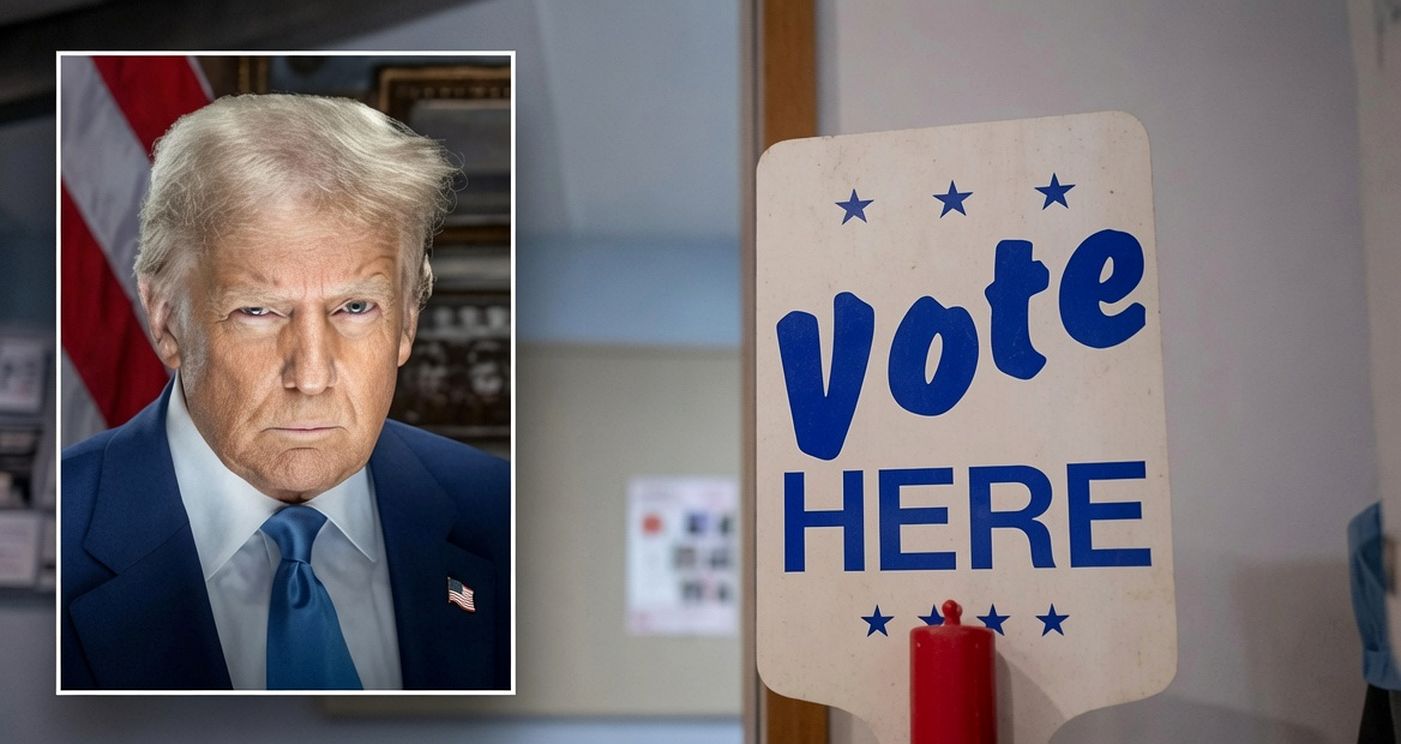
A federal judge has struck down a key portion of New Hampshire’s voter registration law in the middle of several midterm elections currently underway.
The ruling orders the state to once again allow voters to register using sworn affidavits if they do not have documentary proof of citizenship readily available.
The decision represents the latest legal battle in the growing national debate over election integrity, voter registration requirements, and proof-of-citizenship laws being enacted across the country.
On May 28, U.S. District Judge Samantha Elliott ruled that portions of New Hampshire’s 2024 election law were unconstitutional and improperly burdened eligible voters attempting to register to vote.
The law, signed by former Governor Chris Sununu in September 2024, eliminated a longstanding option that allowed prospective voters to sign a qualified voter affidavit under penalty of perjury as proof of citizenship when documentary evidence was unavailable.
Under the challenged law, voters were required to present documents such as a birth certificate, passport, or naturalization paperwork to register.
Voting rights organizations and several New Hampshire residents quickly filed lawsuits after the law took effect, arguing that many eligible citizens do not have immediate access to such documents and could be prevented from exercising their right to vote.
The lawsuits were eventually consolidated into a single case before the federal court.
Judge Elliott sided with the plaintiffs, finding that the removal of the affidavit option resulted in some otherwise eligible voters being turned away from polling locations when attempting to register on Election Day.
In her ruling, Elliott emphasized that a sworn affidavit is itself a form of evidence and should not be treated as an exception to citizenship verification requirements.
“It may be tempting for some to describe the Qualified Voter Affidavit as an exception to the proof-of-citizenship requirement, but it is not,” Elliott wrote.
“A sworn affidavit capable of exposing an affiant to criminal prosecution is a method of proving citizenship and not an exception to that requirement.”
The ruling immediately restores the use of qualified voter affidavits ahead of New Hampshire’s September 8 primary election.
State officials had defended the law as a common-sense measure designed to strengthen election integrity and prevent noncitizens from registering to vote.
The New Hampshire Attorney General’s Office argued that documentary proof requirements reduce opportunities for voter fraud and increase public confidence in election outcomes.
Officials also pointed to additional legislation passed in 2025 that expanded the verification tools available to election administrators.
That new law, signed by Governor Kelly Ayotte earlier this month, allows election officials to verify citizenship through state, federal, and interstate databases when documentary proof is not immediately available.
If those databases confirm an individual’s citizenship status, they can satisfy the registration requirement without physical documentation.
State officials argued that these safeguards significantly reduced any burden on voters while maintaining election security.
Following the ruling, Attorney General spokesperson Michael Garrity indicated that New Hampshire plans to appeal.
“We are disappointed with the court’s decision and are carefully reviewing the order at this time,” Garrity said.
“HB 1569 represents a common-sense approach to voter registration and election administration designed to protect the integrity of our elections.”
Supporters of proof-of-citizenship requirements argue that requiring documentation helps ensure that only eligible citizens participate in elections.
The case arrives as proof-of-citizenship laws are expanding nationwide.
According to data tracking election laws, 12 states currently require some form of documentary proof of citizenship during voter registration.
Eight states require documentary proof in virtually all circumstances, while several others use verification systems that require documentation only when citizenship status cannot be confirmed through existing government databases.
North Dakota remains the lone state without a traditional voter registration system.
This year alone, Florida, Mississippi, South Dakota, and Utah enacted or expanded proof-of-citizenship requirements.
Meanwhile, lawmakers in 23 states have introduced dozens of additional bills related to citizenship verification and voter registration procedures.