A major legal battle over immigration policy has ended with a federal court handing down a decision that could affect not only one state but potentially influence similar programs across the country.
The ruling represents another courtroom victory for the Trump administration as it continues challenging state policies that federal officials argue conflict with immigration law and unfairly favor those in the country illegally.
A federal judge has ruled that Illinois laws allowing certain illegal immigrants to receive in-state tuition rates and state-funded financial aid at public colleges and universities are unconstitutional.
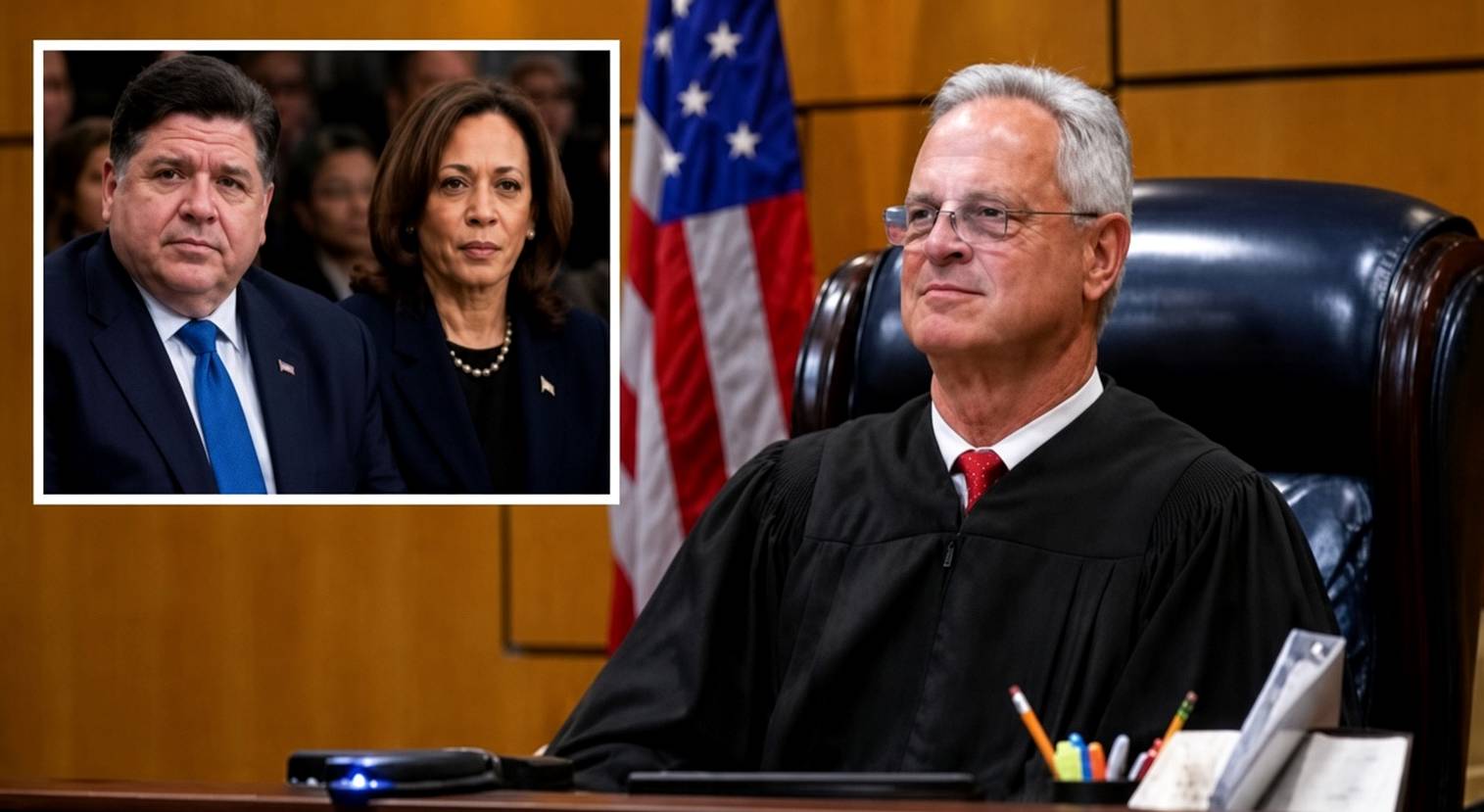
U.S. District Judge David W. Dugan found that Illinois’ tuition policy violates federal law and also struck down the state’s Retention of Illinois Students & Equity, or RISE, Act.
The lawsuit was filed by the U.S. Attorney’s Office for the Southern District of Illinois and the Department of Justice’s Civil Division.
Federal prosecutors argued that Illinois unlawfully provided tuition and financial aid benefits to certain illegal immigrants that were unavailable to many American citizens living outside the state.
Judge Dugan agreed with the federal government’s position, ruling that the state’s policies could not stand.
The lawsuit named Illinois Gov. JB Pritzker, Attorney General Kwame Raoul and officials representing several public colleges and universities across the state.
Those institutions included the University of Illinois, Southern Illinois University, Chicago State University, Eastern Illinois University, Illinois State University, Northeastern Illinois University and Rend Lake College.
Under the RISE Act, certain illegal immigrant students could qualify for state financial aid if they graduated from an Illinois high school, attended school in the state for at least three years and pledged to seek lawful permanent resident status as soon as they became eligible.
Federal prosecutors argued that those requirements did not overcome the conflict with federal law.
The Justice Department maintained that federal law generally prohibits states from offering postsecondary education benefits to individuals who are in the country illegally based on residency unless those same benefits are offered to all U.S. citizens regardless of where they live.
According to the government, Illinois instead allowed certain illegal immigrants to pay reduced in-state tuition while many American citizens from neighboring states continued paying higher out-of-state tuition rates.
Following the ruling, U.S. Attorney Steven D. Weinhoeft praised the court’s decision.
“Illinois sought to incentivize illegal immigration on the taxpayer’s dime by treating illegal aliens better than U.S. citizens living in other states, in clear violation of federal law,” Weinhoeft said in a statement.
“This ruling enforces the statute Congress wrote and stops the State from putting illegal aliens ahead of American citizens.”
Supporters of the Illinois programs have argued that the policies were intended to help students who had spent years living and attending school in Illinois continue their education regardless of their immigration status.
Opponents have argued that immigration policy is governed by federal law and that states cannot extend benefits that place illegal immigrants in a more favorable position than American citizens from other states.
Neither Gov. Pritzker’s office nor Attorney General Raoul’s office immediately responded to requests for comment following the ruling.
Neither office indicated whether the state intends to appeal Judge Dugan’s decision.
If Illinois files an appeal, the case would likely move to the U.S. Court of Appeals for the Seventh Circuit.
Until then, the federal court’s ruling prevents Illinois from enforcing the tuition and financial aid provisions invalidated by Judge Dugan unless a higher court issues a stay.
The decision could also attract attention beyond Illinois because several other states have enacted similar policies allowing certain illegal immigrants to qualify for resident tuition rates or state financial aid, Fox 32 reported.
Whether those programs ultimately face similar legal challenges is uncertain.
However, Judge Dugan’s ruling adds another significant decision to the ongoing legal debate over the balance between state education policies and federal immigration law.