The sudden death of one of Washington’s most influential Republicans continues to generate questions, with a new announcement from the FBI adding another development to an already closely watched story.
While many public figures have speculated about what may have happened, federal officials have so far limited their comments to confirming they are assisting authorities as the investigation into Sen. Lindsey Graham’s death continues.
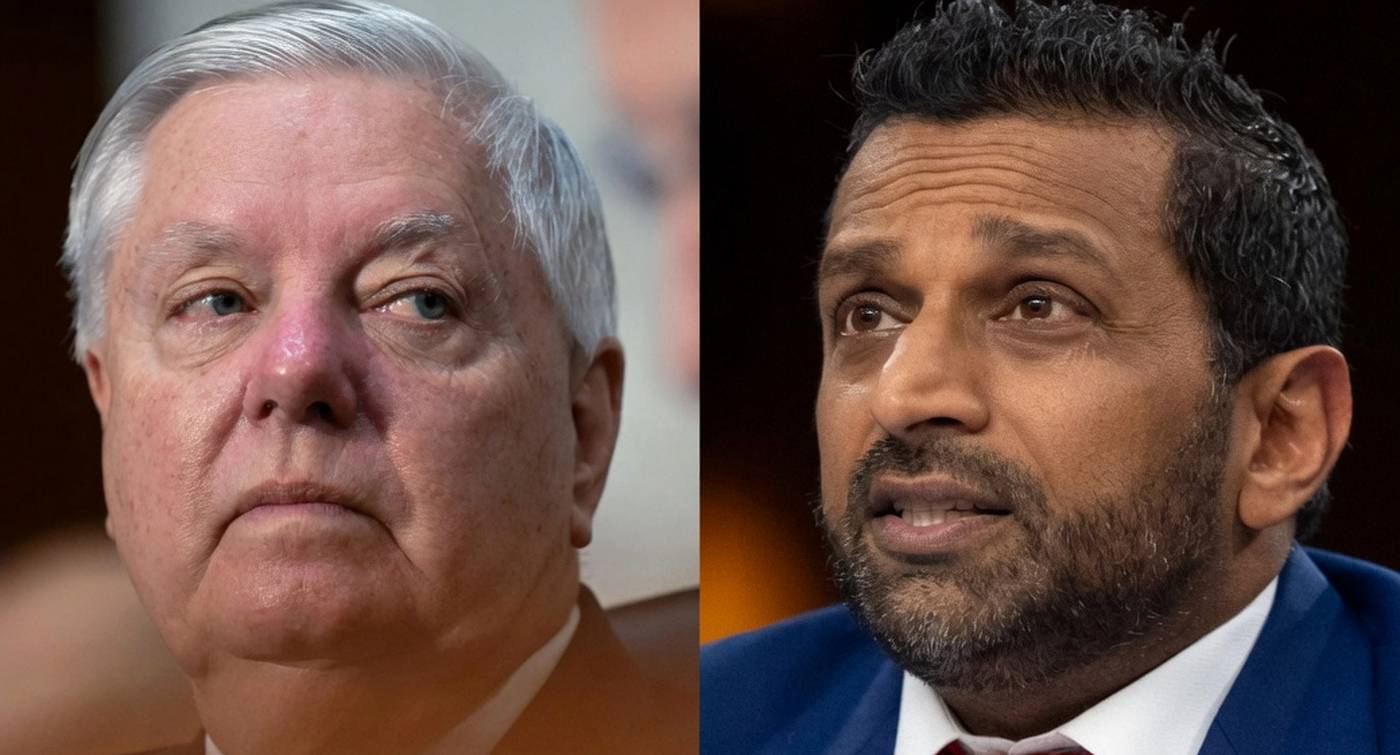
FBI Director Kash Patel announced Sunday that the Federal Bureau of Investigation is assisting local authorities following the unexpected death of Sen. Lindsey Graham, who died Saturday at the age of 71 after what his office described as a “brief and sudden illness.”
“Our FBI is assisting local authorities and has made every necessary resource available,” Patel wrote on X.
Patel did not elaborate on the nature of the FBI’s assistance, and neither the bureau nor local authorities have indicated that foul play is suspected.
Graham’s office announced his death early Sunday morning but did not disclose an official cause of death.
According to multiple reports, emergency dispatchers received a 911 call from Graham’s Washington, D.C., residence at approximately 8:30 p.m. Saturday for a person experiencing cardiac arrest.
Authorities have not publicly released the findings of any medical examination, and no official cause of death has been announced.
The longtime South Carolina senator had just returned from a trip to Ukraine, where he met with President Volodymyr Zelenskyy and visited Ukrainian military facilities while reaffirming his support for continued U.S. backing in the country’s war against Russia.
Graham had also been one of the Senate’s most outspoken advocates for strong action against Iran and other U.S. adversaries.
Following news of his death, Iranian state television aired comments from a presenter celebrating Graham’s passing because of his outspoken positions on Iran and U.S. foreign policy.
The combination of Graham’s high-profile national security role, his recent overseas travel and the absence of an official cause of death has prompted widespread public speculation online.
Megan Mobbs, director of the Center for American Safety and Security at the Independent Women’s Forum, argued that a cardiac arrest call alone does not explain what caused Graham’s heart to stop.
“Cardiac arrest tells us how his life ended. It does not tell us why his heart stopped,” Mobbs wrote on X.
She said the circumstances warranted “a complete forensic autopsy, preservation of all relevant biological specimens, comprehensive toxicology and histology, and consultation with federal law enforcement and counterintelligence authorities.”
Conservative commentator Matt Van Swol questioned the timing of Graham’s death, pointing to recent video showing the senator appearing healthy during his trip to Ukraine.
Meanwhile, conservative activist Laura Loomer called for a full investigation, citing past threats made against Graham by individuals associated with Russia.
Others urged caution against jumping to conclusions.
Townhall columnist Dustin Grage wrote that a source told him Graham had dealt with blood pressure issues for decades and noted that the senator’s father also died from cardiac arrest at age 69.
“I know the conspiracy theories won’t stop, but sometimes life just happens. Not everything is a conspiracy,” Grage wrote.
Radio host Dana Loesch echoed that sentiment, saying sudden cardiac events often occur without warning.
For now, the confirmed facts remain limited: Graham died following what his office called a brief and sudden illness, the FBI has confirmed it is assisting local authorities, and officials have not announced an official cause of death.
Until additional information is released by investigators or the medical examiner, questions surrounding the circumstances of Graham’s death are likely to continue.