The Supreme Court delivered a major ruling Thursday in favor of Terry Pitchford, a death row inmate in Mississippi.
The nation’s highest court held in a narrow 5-4 decision that he was denied a fair opportunity to challenge the prosecution’s removal of black jurors during his trial.
The ruling in Pitchford v. Cain vacates Pitchford’s capital murder conviction and death sentence, sending the case back to Mississippi and allowing prosecutors to pursue a new trial if they choose.
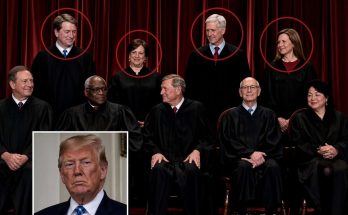
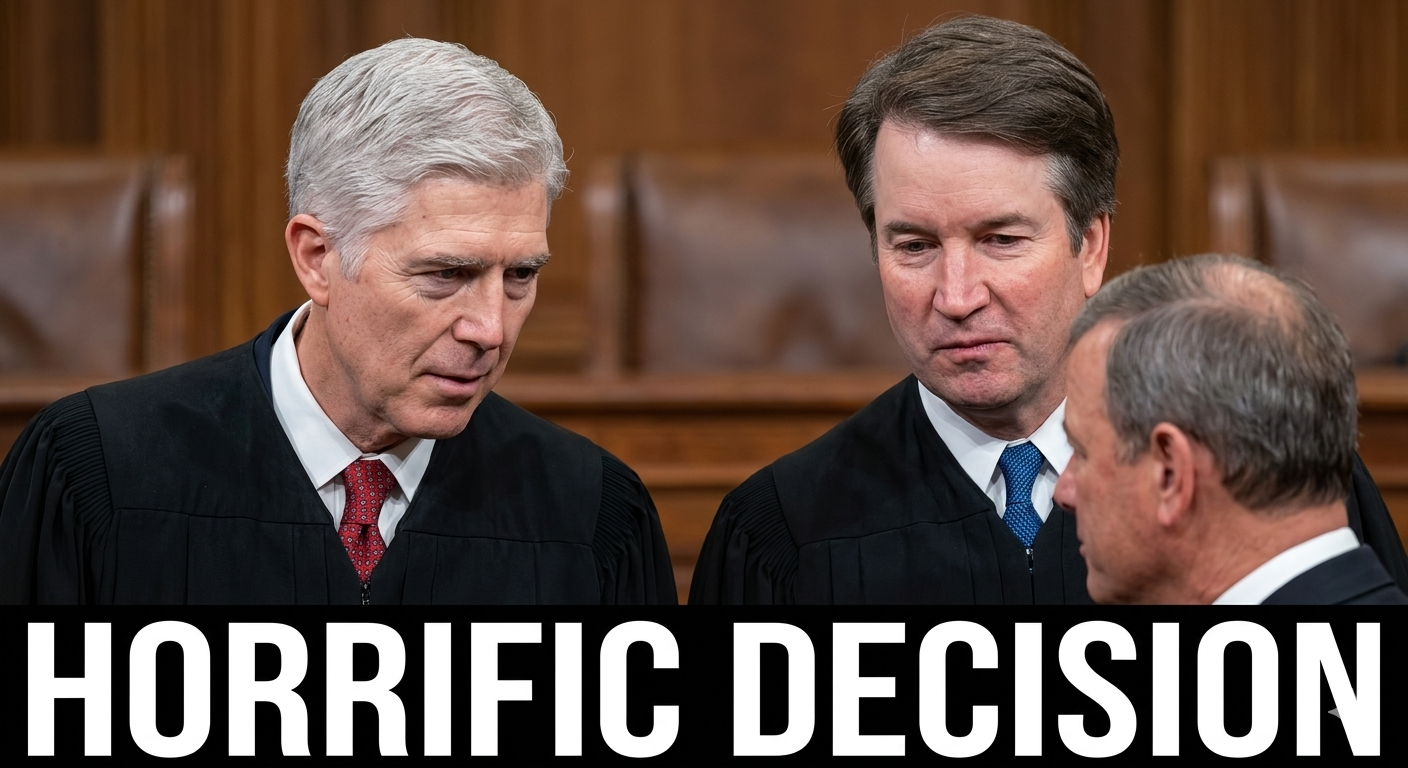
Justice Brett Kavanaugh authored the majority opinion, joined by Chief Justice John Roberts and the Court’s three liberal justices—Sonia Sotomayor, Elena Kagan, and Ketanji Brown Jackson.
The unusual coalition once again highlighted the increasingly unpredictable nature of Supreme Court alignments, particularly in criminal procedure and jury-selection cases.
Dissenting were Justices Clarence Thomas, Samuel Alito, Neil Gorsuch, and Amy Coney Barrett, who argued that the lower courts had properly handled the case and that the conviction should have remained intact.
At the heart of the case is a dispute over jury selection procedures and the Supreme Court’s longstanding precedent in Batson v. Kentucky, the 1986 ruling that prohibits prosecutors from using peremptory strikes to remove potential jurors solely because of their race.
The controversy stems from a Mississippi murder case dating back more than two decades. In 2004, Pitchford, then 18 years old, and Eric Bullins, then 16, carried out a robbery at a grocery store in Grenada, Miss.
During the crime, prosecutors said Bullins fired the shots that killed the store’s white owner, Reuben Britt.
Because Bullins was a juvenile at the time of the offense, he was not eligible for the death penalty under constitutional standards governing juvenile offenders.
He ultimately received a 20-year prison sentence. Pitchford, however, faced capital murder charges and was sentenced to death following his conviction.
The Supreme Court’s latest ruling does not address his guilt or innocence, but instead focuses on whether the trial court properly handled allegations that black jurors were excluded from the jury in violation of Batson.
The dispute arose during jury selection, when then-District Attorney Doug Evans used peremptory strikes to remove four of the five black prospective jurors who remained in the jury pool.
According to court records, Evans offered several race-neutral explanations for the strikes.
One prospective juror had returned late from a lunch break, two had brothers who had been convicted of violent crimes, and another was described as sharing demographic characteristics with Pitchford, including being young, unmarried, and a parent.
Pitchford’s attorneys challenged the strikes under the Supreme Court’s Batson framework.
Under that process, the defense first raises an inference of discrimination, the prosecutor then provides race-neutral explanations, and the defense is allowed to argue that those explanations are merely a pretext for unlawful discrimination.
The central issue in the case was not necessarily the reasons Evans offered, but whether the trial court properly completed the Batson process. According to a majority of Supreme Court justices, the judge overseeing the trial accepted the prosecutor’s explanations and moved forward without giving the defense a meaningful opportunity to challenge them before the jury was finalized.
The jury that ultimately convicted Pitchford consisted of 11 White jurors and one Black juror.
Pitchford appealed to the Mississippi Supreme Court and later sought relief in the federal district court in Mississippi.
The federal court ruled in his favor and overturned the conviction, finding that the trial judge had been “seemingly eager to proceed to the case itself, quickly deemed the reasons as race-neutral and moved on.”
However, the U.S. Fifth Circuit Court of Appeals reversed the lower court and put Pitchford back on death row.
Afterward, the Supreme Court agreed to take the case.
“In this case, whether due to confusion, oversight, an overly hurried jury selection process, or some other cause, things broke down, and the ordinary trial-court procedure for resolving Batson claims at step three never occurred, notwithstanding the repeated efforts of Pitchford’s counsel to pursue and preserve the Batson objection,” Kavanaugh wrote for the majority.