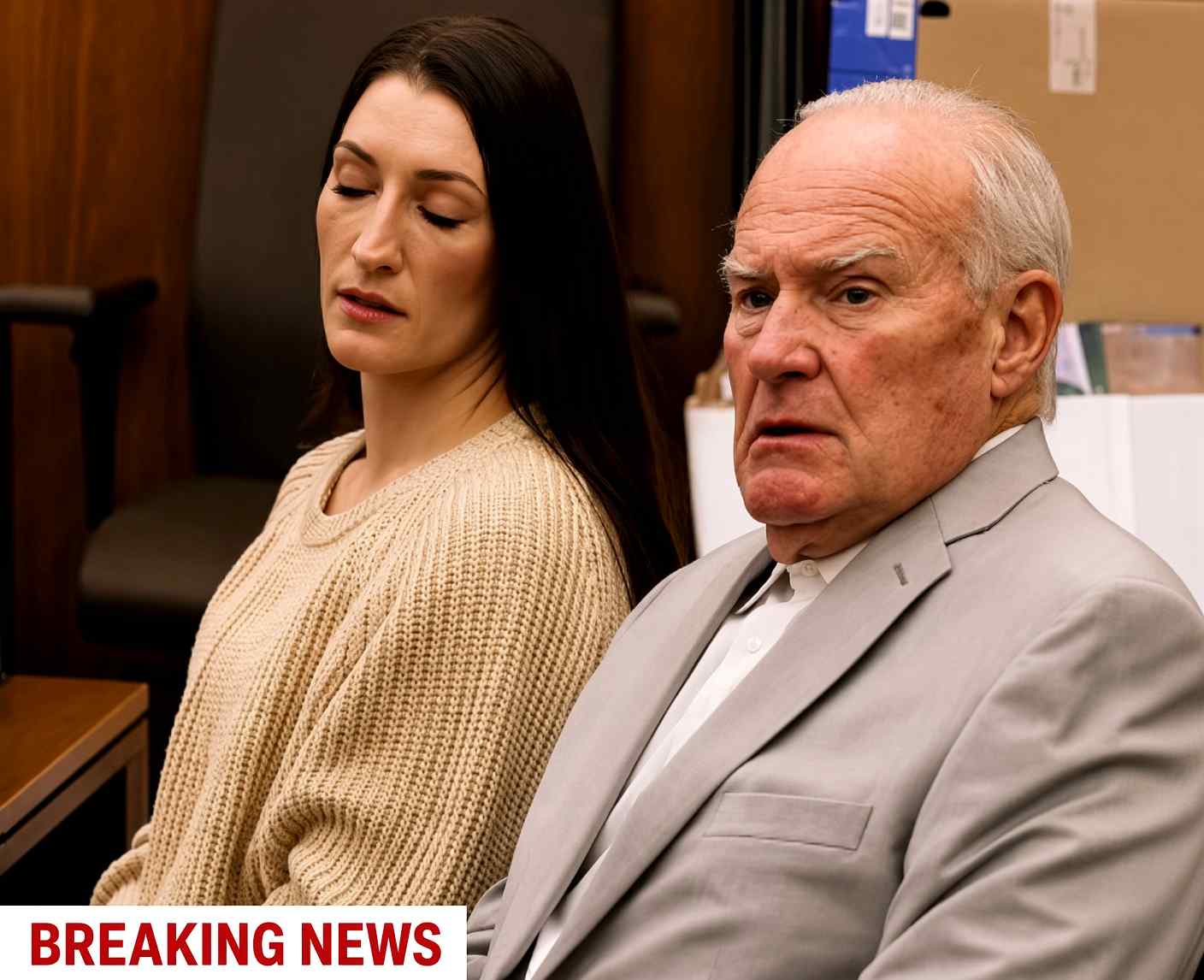
Lindsay Clancy’s murder trial is entering another tense day without a verdict as the jury continues weighing the fate of the Massachusetts mother who killed her three young children.
After three full days of deliberations, her defense attorney is already publicly acknowledging that another legal battle could potentially follow whatever decision jurors ultimately make.
Jurors concluded their work Monday without reaching a verdict and are scheduled to return Tuesday morning to continue deliberating. As attorneys left the courthouse, Clancy’s lawyer offered his first notable comments about what could happen if the jury’s decision goes against his client.
Defense attorney Kevin Reddington told reporters that he sees “many issues” that could potentially form the basis of an appeal following Clancy’s trial.
Reddington did not detail each of the issues he believes could be challenged, and no appeal would be necessary unless Clancy is convicted.
Despite raising the possibility, Reddington said he would respect the jury’s decision after the considerable amount of time its members have devoted to hearing the case.
“I’ve been around long enough to know that whatever a jury says, we accept, and that’s it,” Reddington told reporters.
“These people have devoted five weeks of their life,” he added.
Asked whether he had any prediction about how much longer deliberations might continue, Reddington joked that possessing that knowledge would make him considerably more fortunate.
“If I knew that, I’d probably win the lottery,” he said.
Clancy faces three counts of first-degree murder for the January 2023 deaths of her children, 5-year-old Cora, 3-year-old Dawson and 8-month-old Callan.
Clancy does not dispute that she strangled the three children inside the family’s Duxbury home, but her attorneys contend she was suffering from postpartum psychosis and was legally insane at the time.
Prosecutors argue that Clancy understood her actions and deliberately planned and carried out the killings while her husband was away from the home.
The jury’s prolonged deliberations come after weeks of conflicting expert testimony concerning Clancy’s mental condition, psychiatric treatment and behavior before, during and after the children’s deaths.
Jurors must ultimately decide among several possible outcomes, including first-degree murder, second-degree murder, manslaughter, not guilty or not guilty by reason of insanity.
The insanity option has also generated questions about what would happen to Clancy if jurors determine she was not criminally responsible.
Retired Massachusetts Superior Court Judge Jack Lu cautioned that such a verdict would not necessarily mean Clancy would quickly regain her freedom.
Lu explained that a judge would initially commit Clancy to a secure mental health facility, where officials would subsequently evaluate whether she continued to represent a danger to herself or others.
Those officials could repeatedly seek to have her recommitted “year after year after year,” according to Lu.
Release would only become possible if officials eventually concluded that continued commitment was no longer warranted.
Lu also disputed the perception that confinement in a psychiatric institution following a major criminal case necessarily provides an easier path toward freedom than incarceration.
“When it intersects with a major criminal case, then that preconception is false,” Lu said.
For Clancy, however, those questions remain hypothetical until the jury reaches its decision.
Nine women and three men are determining whether Clancy was legally responsible when she killed Cora, Dawson and Callan or whether her mental condition met Massachusetts’ standard for criminal insanity.
After three days, they still have not answered that question, Fox News reported.
They will return Tuesday morning for day four of deliberations, while Clancy, her attorneys and the families involved continue waiting for a verdict that could determine whether the next chapter unfolds inside a prison, a secure psychiatric facility or an appellate courtroom.