The Supreme Court of the United States has allowed the Trump administration to temporarily halt more than $65 million in federal education grants, siding with the government in an ongoing legal dispute over funding tied to diversity initiatives.
In a 5–4 decision, the court blocked a lower court order that had required the U.S. Department of Education to reinstate the grants while litigation proceeds. The funding had been terminated earlier this year after officials determined that certain programs included what they described as objectionable diversity, equity, and inclusion (DEI) content.
The unsigned majority opinion emphasized that once federal funds are distributed, they are often difficult or impossible for the government to recover. The justices also concluded that the states challenging the cuts would not suffer permanent harm if the funding remains paused during the legal process.
The dispute centers on two federal grant programs designed to address a nationwide teacher shortage. The Department of Education canceled the vast majority of grants—more than 100 in total—following internal reviews of program content.
A coalition of eight states, led by California, filed suit in federal court, arguing that the administration violated federal administrative law by abruptly terminating the funding. The states contended that universities and nonprofits rely on the grants to train new teachers and that the cuts would disrupt critical workforce pipelines.
A federal district judge in Massachusetts, Myong Joun, issued a temporary restraining order requiring the government to restore the funding in the plaintiff states. The order also barred further terminations while the case moved forward.
However, the Supreme Court determined that it could intervene despite the temporary nature of the lower court’s order, reasoning that it functioned similarly to a preliminary injunction, which is typically subject to appeal.
The Trump administration had argued that allowing the lower court ruling to stand would set a precedent enabling federal judges to override executive branch decisions on funding. Acting Solicitor General Sarah Harris told the court that without intervention, agencies could be forced to continue funding programs they deemed inconsistent with federal priorities.
The majority appeared to agree, suggesting the administration is likely to prevail in its argument that the district court lacked authority to order the payments. The opinion also pointed to the Tucker Act, a federal law that assigns certain monetary claims against the government to a specialized court, as a potential jurisdictional issue.
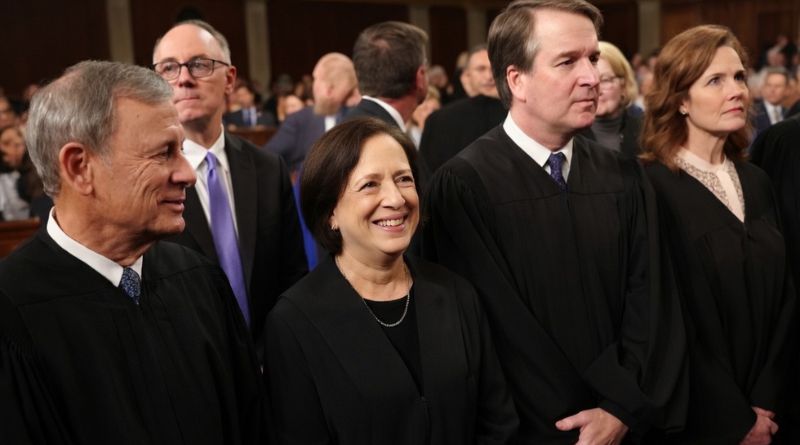
Chief Justice John Roberts joined the court’s liberal justices in dissenting from the decision, signaling concern about the court’s intervention at this stage of the case.
Justice Elena Kagan criticized the ruling, calling it a “mistake” and arguing that the administration had not adequately defended the legality of canceling the grants. She warned that acting on an emergency basis without full briefing increases the risk of flawed decisions.
Justice Ketanji Brown Jackson, joined by Justice Sonia Sotomayor, also dissented. Jackson argued that the court’s intervention was premature and unnecessary, noting that the lower court’s order was temporary and limited in scope.
She further contended that the states are already experiencing tangible harm. In one example, she said, school systems have had to cut staff due to the loss of grant funding.
The ruling highlights ongoing tensions between the executive branch and federal courts over control of government spending and policy implementation. It also reflects broader political and legal disputes over the role of diversity-related programs in federally funded initiatives.
While the Supreme Court’s decision allows the administration to pause the funding for now, it does not resolve the underlying legal questions. The case will continue to move through the lower courts, where judges will ultimately determine whether the Department of Education acted lawfully in terminating the grants.
In the meantime, schools and organizations that depended on the funding may face uncertainty as they adjust to the temporary loss of federal support.