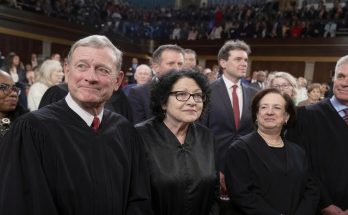
Last week, the U.S. Supreme Court greatly expanded presidential power over the executive branch, holding 6-3 that presidents can remove officials from independent federal agencies without the firing protections that had been recognized for decades.
The decision gives President Donald Trump the authority to remove Federal Trade Commissioner Rebecca Slaughter, a Democratic appointee whose case had become a key test of the administration’s push to expand presidential removal powers.
In so doing, the Court overturned its 1935 decision in Humphrey’s Executor v. United States, breaking a long-standing precedent that allowed Congress to protect certain executive branch officials from at-will removal.
The decision is expected to have broad implications for independent agencies that regulate areas including labor relations, federal employment, workplace discrimination, consumer protection, aviation safety and financial regulation, The Hill reported.
Commentator Ben Dyke described the ruling as a “bombshell,” in an analysis, saying “This is historic.
He also said the majority of the justices were correct in returning to the president the constitutional powers that are his as head of the Executive Branch and that the Legislative Branch could not prevent him from exercising his authorities.
In the ruling, Chief Justice John Roberts wrote for the majority that “if anything remains of Humphrey’s, we overrule it.
The ruling is also expected to impact about two dozen multi-member independent agencies across the federal government, besides the Federal Trade Commission, giving presidents more power to remove commissioners and board members and install appointees who share their policy priorities.
“The result is a President who emerges with far greater power than ever before,” Justice Sonia Sotomayor wrote in dissent, joined by fellow liberal Justices Elena Kagan and Ketanji Brown Jackson, The Hill reported.
But this is a power not given him by the People, by the Congress, or by the Constitution,” their dissent continued.
The dissent said that in giving the President this unchecked power, the Court “turns its back on its own precedent, misreads our history, and abandons all pretense of judicial modesty.”
But the dissent is inconsistent with the plain text of the Constitution.
As Dyke noted, Article II begins with the words: “The executive Power shall be vested in a President of the United States of America.
That, he says, makes clear that the founders intended for the president alone to make all decisions regarding Executive Branch authorities, not the heads of Executive Branch offices established by Congress, many of whom may not share the president’s policy preferences, and could slow-walk or even ignore his orders.
As for Sotomayor, she read her dissent from the bench, a practice that justices use when they want to emphasize their strong disagreement with a case.
For decades, conservative legal scholars and advocacy groups have argued that the Humphrey’s Executor precedent inappropriately limited the president’s constitutional authority over the executive branch and was inconsistent with the separation of powers.
The Supreme Court’s conservative majority had already whittled down the scope of the 1935 ruling in a series of recent cases before officially overturning it.
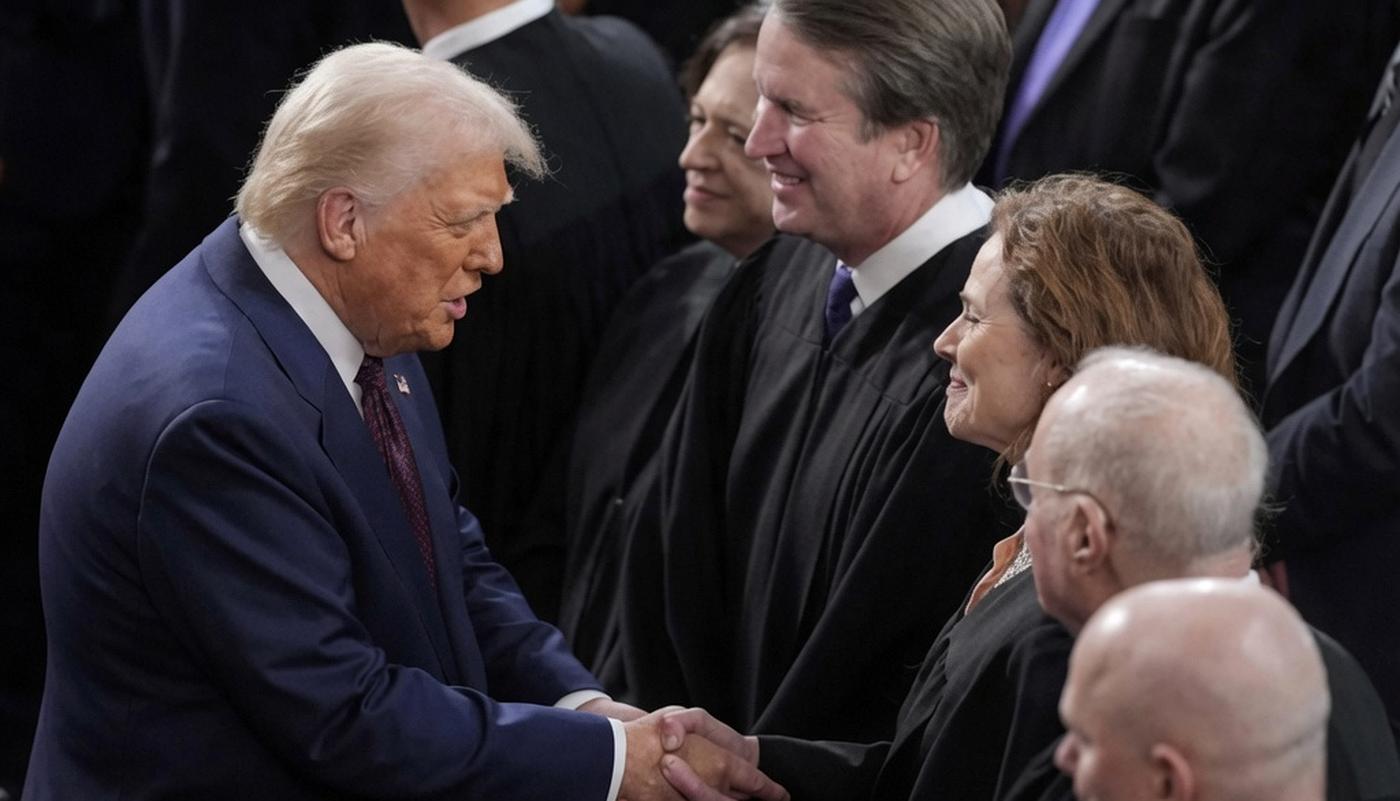
Trump praised the ruling in a post on Truth Social.
“This Decision has long been sought by Presidents of the United States, all the way back to the 1930s. “Such an Honor to be the sitting President who won this Historic and Unprecedented Ruling, one of the most important ever given with respect to Presidential Powers,” he said.
Back in the White House, Trump set the stage for the Supreme Court to reconsider the precedent, firing the heads of several independent federal agencies in defiance of statutory protections against removal.
Those officials typically prevailed in lower courts, which were still bound by the Supreme Court’s 1935 decision.
But the Supreme Court has the power to overrule or modify its own precedents, which ultimately results in the most recent decision.