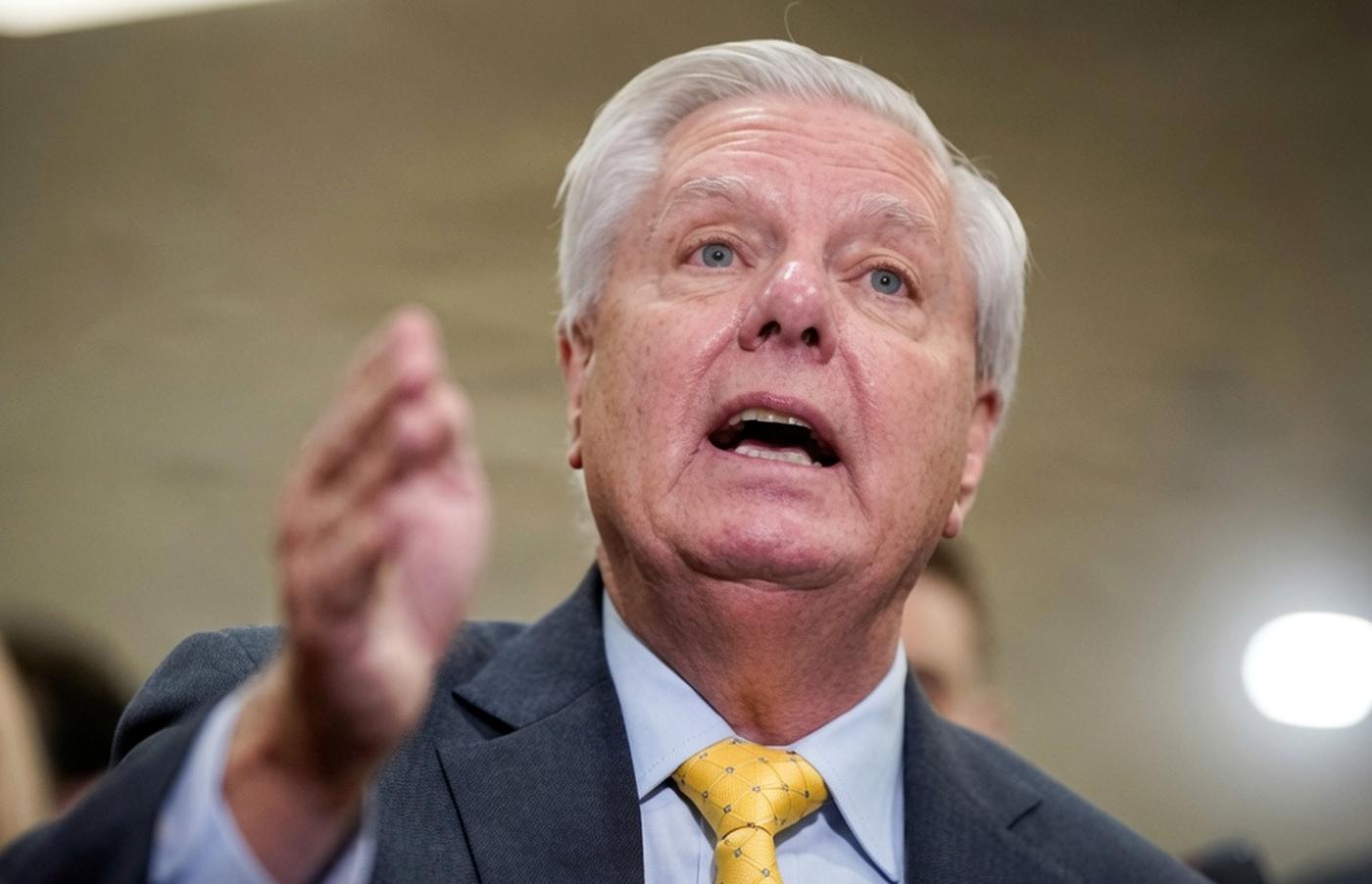
Senator Lindsey Graham passed away Saturday evening after what his office described as a sudden illness. There were no known prior health issues. He had recently returned from Ukraine, where he toured a drone production facility, and was scheduled to appear on Meet the Press Sunday morning. He was 71 years old.
Graham served South Carolina in the Senate for over two decades. His record was complicated and sometimes maddening for conservatives — his instincts on foreign policy were hawkish to the point of reflexive interventionism, and his relationship with Trump evolved through phases that tested the patience of Republican voters more than once. But his moment during the Kavanaugh hearings — when he turned on his Democratic colleagues with a fury nobody saw coming and said exactly what needed to be said — reminded everyone why he’d survived in South Carolina politics as long as he had. When it counted most, he showed up.
Trump’s statement was gracious and personal. Graham was a friend, a fighter, and a patriot who served his country in uniform and in the Senate for most of his adult life. Whatever the policy disagreements, that record deserves acknowledgment and his family deserves condolences.
Now, because the political reality cannot wait, here is what comes next for South Carolina:
Graham had already won his Republican primary just a month ago. That complicates the replacement process considerably — it’s not simply a matter of Governor Henry McMaster appointing a successor and moving on. McMaster can appoint an interim senator to serve until the vacancy is filled under state law. But because Graham had already secured the Republican nomination, the South Carolina Republican Party must now select a replacement nominee through a new process entirely.
The timeline moves quickly. Candidate filing opens on the second Tuesday after this weekend — July 28th — and runs for one week. The special primary is then held on the second Tuesday after filing closes. If no candidate wins an outright majority, a runoff follows two weeks after that.
Whoever emerges from that process will face Democrat Annie Andrews in the general election. South Carolina is a reliably red state, and the seat should remain Republican — but “should” and “will” are different words, and the compressed timeline, combined with the national attention this race will now receive, means Republicans cannot afford to hand this nomination to the wrong candidate. The stakes are real. The window is short.
Graham spent twenty-four years representing South Carolina in the United States Senate. He leaves behind a seat his party needs to hold, in a state that has trusted Republicans to hold it for a generation.
The best tribute to his service is making sure that continues.
Rest in peace, Senator.