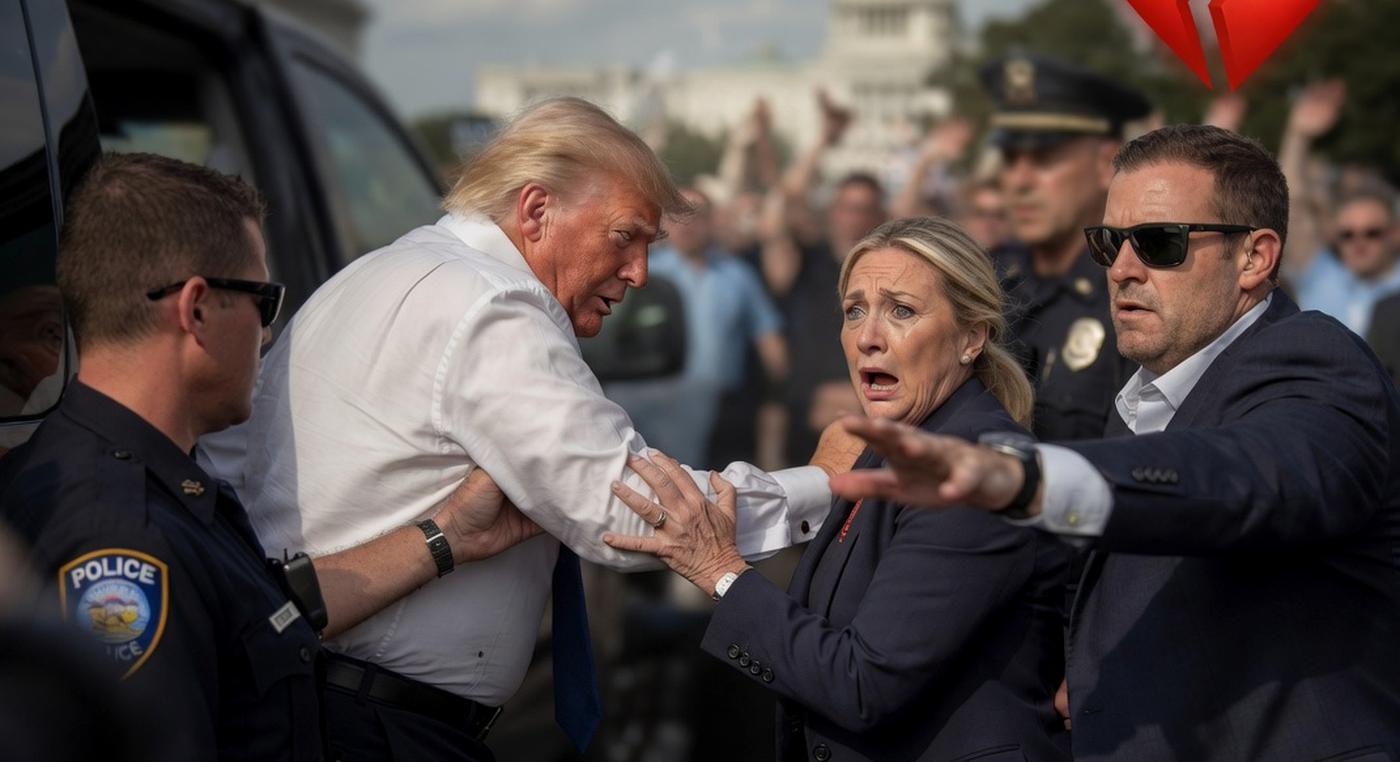
Recent social media activity has been dominated by a wave of alarmist posts claiming that former President Donald Trump was involved in a second shooting incident in Washington, D.C.. These reports, often characterized by urgent language and sensationalist framing, triggered thousands of interactions across various platforms within minutes. However, as the narrative spread, it became clear that the claims were entirely unfounded, illustrating the dangerous speed at which misinformation can propagate when emotional triggers override the standard process of verification.
Neither the United States Secret Service nor any credible law enforcement agencies have issued statements or emergency alerts regarding such an event. Furthermore, major global news organizations—which maintain constant vigils over high-profile political figures—have produced no corroborating reports. In the realm of national security, the absence of an immediate official briefing is frequently the most reliable sign that a viral story lacks a factual basis.
Investigations into the source of these rumors point to a tactical use of digital distortion. Many of the viral posts utilized recycled footage or images from past events, repurposed with misleading captions to suggest a current crisis. This strategy is often employed by anonymous or low-credibility accounts to exploit algorithmic rewards for high-engagement, emotionally charged content.
By the time these claims are debunked by fact-checkers, they have often already achieved significant reach and caused unnecessary public alarm.
Analysts suggest that public confusion may partially stem from the genuine assassination attempt on Donald Trump that occurred in Butler, Pennsylvania, earlier in 2024. While that specific incident was documented by exhaustive evidence and led to significant changes in security protocols, no such evidence exists for the recent claims in the capital.
This episode serves as a stark reminder of the risks associated with a polarized digital landscape, where the speed of sharing frequently outpaces the deliberate pace of journalistic integrity. Ultimately, the event reinforces the necessity of relying on multiple trusted sources and resisting the impulse to amplify unverified headlines.