Inside the ballroom, the atmosphere shifted from confusion to primal fear in a heartbeat.
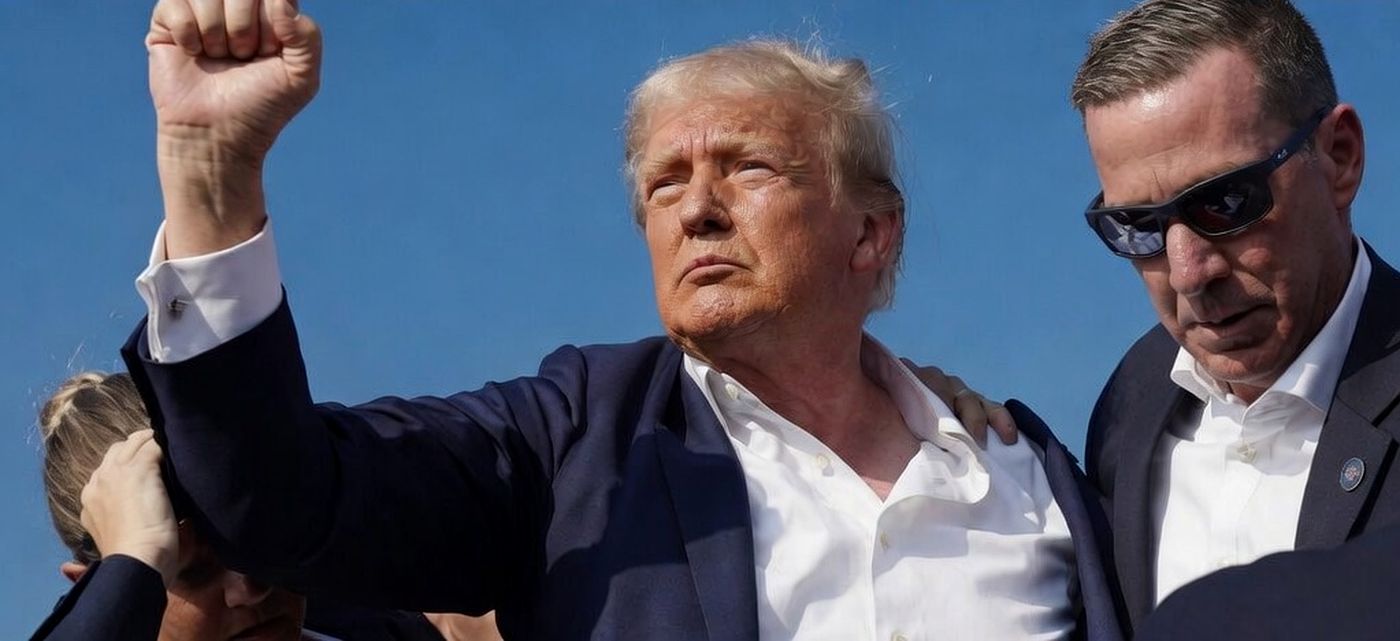
“Shots fired! Shots fired!” agents screamed. The Secret Service Counter-Assault Team (CAT), clad in heavy tactical gear and brandishing long rifles, swarmed the dais. They formed a human wall around the President and First Lady. Simultaneously, agents rushed Vice President Vance out of the room through a side exit.
For the journalists in the room—many of whom had covered war zones in Ukraine or the Middle East—the instinct to report kicked in even as they sought cover. Underneath the tables, a surreal scene unfolded. Reporters from every major network were crouched on the carpet, phones held high, trying to catch a signal that didn’t exist.
“There is notoriously no service in that ballroom,” NBC’s Ali Vitali noted later. “It added to the panic. You’re under a table, you hear people shouting, and you can’t even text your family to say you’re okay.”
In one corner of the room, an “ill-advised” chant of “USA! USA!” broke out, a desperate attempt by some attendees to project defiance. It was quickly hushed by security. The silence that followed was heavier than the noise—a thousand people holding their breath, waiting to know if there was a second shooter, or if the doors to the ballroom would hold.
21:15 — The Evacuation
The actual shooting lasted less than thirty seconds. The response, however, lasted hours.
Hundreds of security personnel from the Secret Service, Metropolitan Police, and even the TSA flooded the hotel’s upper floors. The perimeter was pushed back five blocks. Guests who had managed to slip out early found themselves stranded on Connecticut Avenue, watching as National Guard units took up positions around the hotel.
Inside, the evacuation was methodical but tense. “It was a dramatic scene for minutes and minutes after the shooting,” reported Ken Dilanian. “You didn’t know what was happening… it seemed almost that the threat was still there.”
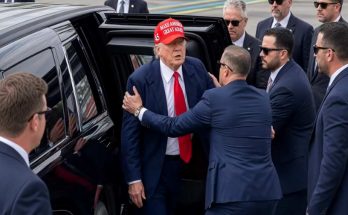
High-profile officials were spotted being hurried into armored SUVs. Steve Scalise, Jameson Greer, and Pete Hegseth were seen exiting the complex under heavy guard. Meanwhile, the suspect, who had been tackled and handcuffed by agents after the brief exchange of fire, was transported to a local hospital for evaluation before being booked on federal charges of assaulting a federal officer and firearm violations.
23:00 — The White House Briefing and the “Ballroom” Project
By 11:00 p.m., President Trump was back at the White House, still in his tuxedo, standing alongside Kash Patel and Acting Attorney General Jeanine Pirro. While he praised the “bravery” of the Secret Service, he quickly pivoted to a topic that has been a hallmark of his second term: the construction of a dedicated presidential ballroom.
“Tonight proves it,” Trump told the gathered press. “This is why I need my ballroom. The one everyone’s been arguing about, the one with the legal challenges. Security is the reason, and tonight is the proof.”
The “White House Ballroom” project—a proposed high-security event space on the White House grounds—has been a point of intense friction between the administration and D.C. urban planners. Critics have called it a “pet project” and a waste of taxpayer funds. Supporters, however, now point to the Hilton breach as an indictment of the vulnerability inherent in public venues.
The Lingering Questions
As Washington wakes up to the aftermath, the post-mortem of the security failure has begun.
How did a man armed with a shotgun and multiple knives get past the initial layers of a high-security perimeter? Reports suggest the suspect may have been staying at the hotel as a guest, allowing him to bypass certain external checkpoints.
Furthermore, the “flimsy” nature of the event’s ticketing system has come under fire. “We’re not talking about barcodes or sports-arena level scanning for the physical tickets,” Ali Vitali observed. “A ticket is a piece of paper. If you’re already inside the hotel, the layers between you and the President are thinner than anyone wants to admit.”
A Night of Ironic Echoes
The irony of the location was lost on no one. Leaving the hotel, many guests exited through the same doors where John Hinckley Jr. stood forty-five years ago.
While the 2026 WHCD shooting resulted in no fatalities, it has fundamentally altered the posture of political events in the capital. The “nerd prom,” as the dinner is affectionately known, was intended to celebrate the First Amendment and the bridge between the press and the presidency. Instead, it ended with the press under tables and the President calling for a fortress.
As the FBI continues to process the crime scene at the Hilton, the conversation has shifted from the “who” to the “where.” If the most secure room in Washington can be turned into a “war zone” in five seconds, the future of public presidential appearances may have just changed forever.
https://www.youtube.com/watch?v=1svu12O8Fqs