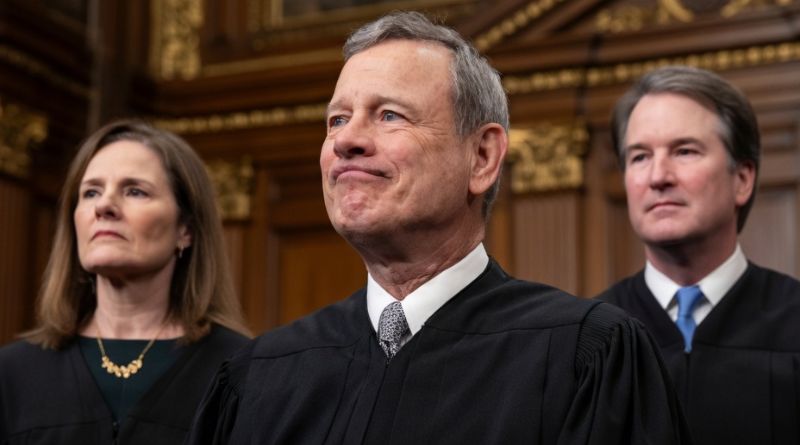
The Supreme Court ruled unanimously that internet providers are not responsible for copyright infringement committed by their users, issuing an opinion in the case Cox v. Sony and overturning a $1 billion verdict.
“Under our precedents, a company is not liable as a copyright infringer for merely providing a service to the public with knowledge that it will be used by some to infringe copyrights,” Justice Clarence Thomas wrote in the opinion. “Accordingly, we reverse.”
The ruling represents a significant victory for broadband providers who have been under pressure from copyright owners to monitor their subscribers’ activities. Cox Communications is no longer liable for the piracy committed by its internet service subscribers regarding songs owned by Sony Music, Warner Music Group, Universal Music Group, and other labels. The ruling effectively ends the billion-dollar-plus copyright lawsuit related to music, Fox Business reported.
The 9-0 ruling overturned a lower court’s decision that had ordered a new trial to determine how much the internet service provider owed the record labels for contributory copyright infringement. Cox had argued that a retrial could have resulted in a verdict against the Atlanta-based ISP of as much as $1.5 billion, the outlet reported.
“The judgment of the Court of Appeals for the Fourth Circuit is reversed, and the case is remanded for further proceedings consistent with this opinion,” the ruling concluded. Justice Sonia Sotomayor, joined by Justice Ketanji Brown Jackson, agreed that Cox should prevail in this case but rejected the broader reasoning of the majority.
Sotomayor wrote in her separate opinion that “the majority, without any meaningful explanation, unnecessarily limits secondary liability” and warned the ruling “also upends the statutory incentive structure that Congress created.”
“The facts of this case do not establish the requisite intent needed to hold Cox liable for infringement that occurred on its network,” she concluded. “Because the majority needlessly curtails secondary liability in a manner inconsistent with both precedent and statute, I concur only in the judgment.”
More than 50 record labels filed a lawsuit in 2018 against Cox Communications, alleging the company failed to take adequate steps to prevent copyright infringement by its users. Under U.S. law, internet service providers are generally not held liable for user infringement if they take reasonable measures to address violations.
However, the labels argued that Cox did not respond effectively to repeated infringement notices, failed to terminate access for repeat offenders, and did not implement sufficient anti-piracy measures.
In 2019, a jury in Alexandria, Virginia, found Cox liable and awarded the labels $1 billion in damages for infringement involving more than 10,000 copyrighted works. The jury determined that Cox was responsible for both contributory infringement and vicarious infringement, two forms of secondary liability under copyright law.
The Richmond, Va.-based 4th U.S. Circuit Court of Appeals overturned the damages award in 2024. The court upheld the jury’s determination of contributory infringement but reversed its finding of vicarious liability, resulting in an order for a retrial to determine the appropriate size of the damages award.
Contributory infringement refers to holding a party liable for another person’s copyright violation if it knew about the activity and materially contributed to it. Vicarious infringement, by contrast, involves liability when a party has the ability to control the infringing conduct and derives a financial benefit from it.
Cox Communications argued that the labels’ position would broaden the scope of contributory infringement beyond its traditional limits. The company said such an interpretation could lead to widespread service terminations, potentially affecting large numbers of users—including households, businesses, hospitals, and universities—based on allegations tied to individual users of a shared connection.
The Supreme Court heard arguments in the case in December. A lawyer representing the administration of President Trump argued in support of Cox Communications.
Several technology companies, including Alphabet Inc., Amazon, and Microsoft, also backed Cox in the case. Trade groups representing the music, film, and publishing industries supported the record labels.